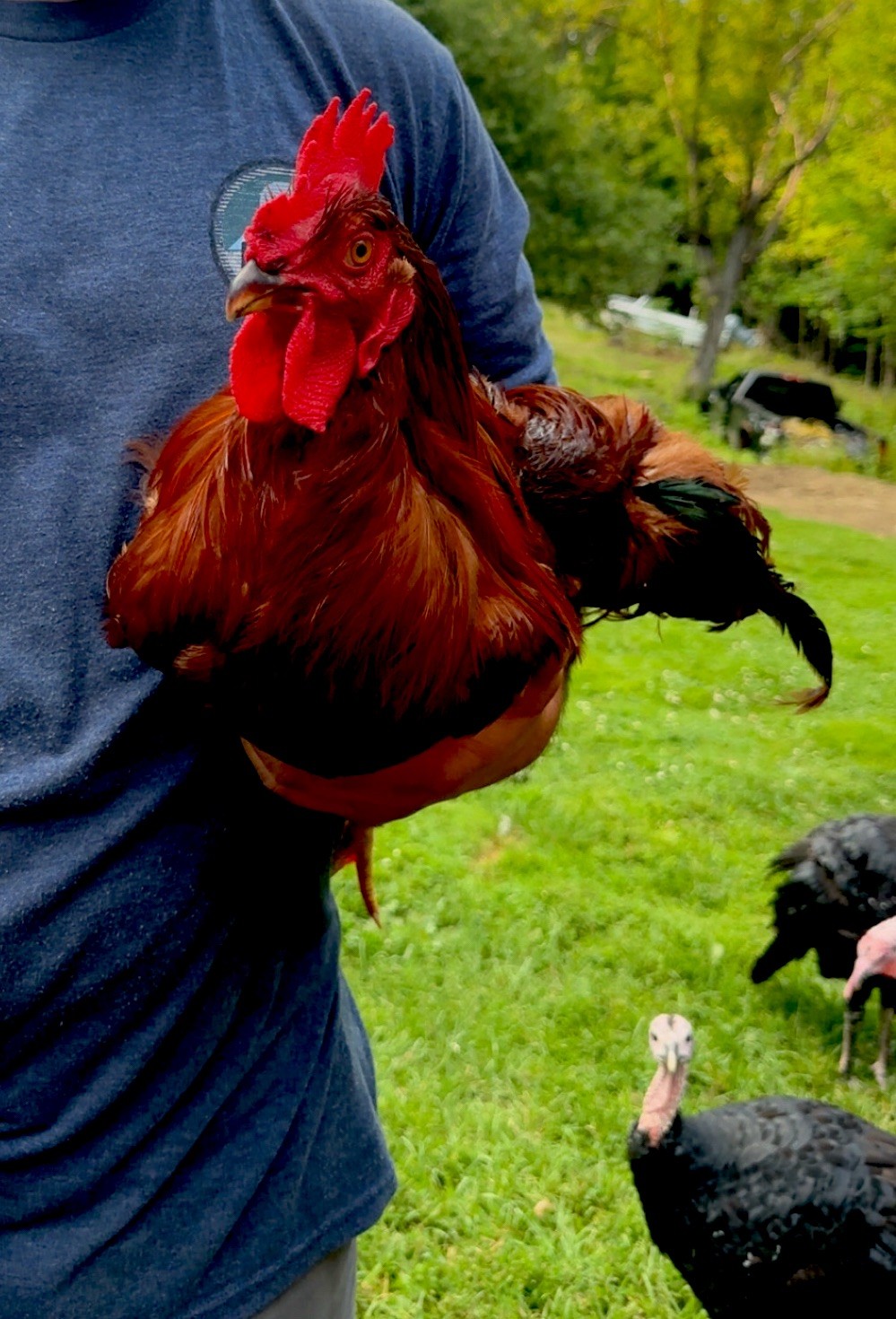
If you are planning your first batch of meat chickens, you will run into the same fork in the road that nearly every homesteader faces: Cornish Cross or Freedom Rangers? These two birds dominate the pasture-poultry world, and for good reason. They both put good meat in the freezer. But they get there in very different ways, and the right choice depends far more on your setup, your goals, and your patience than on which bird is objectively better.
The honest answer is that neither is a mistake. We have raised both, and each has a place. What follows is a fair, tradeoff-by-tradeoff look so you can match the bird to your homestead instead of chasing someone else's opinion.
Time to Butcher: Speed vs Patience
This is usually the first thing people notice, and it is a real difference. Cornish Cross are the sprinters of the poultry world. They reach a 5 to 6 pound dressed weight in roughly 6 to 8 weeks. If your goal is to fill a chest freezer fast, get the birds off your feed bill quickly, and be done before the summer heat sets in, that speed is hard to argue with.
Freedom Rangers take their time. Expect 9 to 11 weeks to reach a comparable weight, sometimes a bit longer if you are pushing them out onto pasture and letting them forage. That extra month means more days of chores, more feed passing through, and a longer wait for the reward. For some people that is a dealbreaker. For others, the slower grow-out is part of the appeal, because it produces a very different bird on the plate.
Feed Cost and Conversion
Cornish Cross are feed-conversion machines. They turn grain into meat more efficiently than almost any other bird you can raise at home, often converting close to 2 pounds of feed per pound of gain. Combined with their short lifespan, that means the total feed bill per bird is usually lower. If you are counting every dollar and buying feed by the bag, this matters.
Freedom Rangers eat a little more feed per pound of finished weight, and they eat it over a longer period, so the feed cost per bird runs higher. Here is the honest counterweight: Rangers are genuinely good foragers. On decent pasture with plenty of bugs and greens, they will offset a meaningful slice of that feed themselves. You will not raise a meat bird on grass alone, but a Ranger that actually works the pasture narrows the gap in a way a Cornish Cross never will, because the Cornish simply will not do the foraging.
Foraging and Pasture Suitability
This is where the two birds part ways the most. Cornish Cross do not really pasture. They will step outside, but they tend to plant themselves near the feeder and stay there. They are bred to eat and grow, not to hunt bugs and scratch through grass. You can raise them in a chicken tractor and move them daily so they get fresh ground and clean air, and that works well, but you should not expect them to range and truly work a paddock.
Freedom Rangers are built for pasture. They are active, curious, and they move. Turn them out and they will scratch, chase insects, and cover ground all day. If your whole reason for raising meat birds is to see them out on green grass living something close to a natural chicken life, Rangers deliver that in a way Cornish Cross cannot. For a rotational, pasture-based system, the Ranger is simply the more natural fit.
Health and Hardiness
The Cornish Cross's greatest strength is also its greatest weakness. That explosive growth puts real strain on the body. Their legs and joints can struggle to keep up with their weight, and heart failure is a known risk, especially in the final weeks or during hot weather. They need careful management: measured feeding rather than free-choice around the clock, shade, and cool water. Losses in the last week or two are not unusual if you are not paying attention.
Freedom Rangers are, plainly, the hardier bird. Because they grow at a more moderate pace, their frames and organs develop in proportion to their weight. They handle heat better, they tolerate weather better, and they are far more likely to make it all the way to butcher day without incident. For a beginner, or for anyone raising birds through a hot Vermont July, that robustness takes a lot of stress out of the process.
Meat Quality, Flavor, and Temperament
On the table, the differences show up too. Cornish Cross give you those big, plump breasts and a lot of tender, mild white meat. It is the closest thing to the grocery-store bird most people picture, and if your family lives on chicken breast, that is a genuine plus.
Freedom Rangers dress out a bit leaner and more proportioned, with a better balance of dark to light meat, firmer texture, and a richer, more chicken-y flavor that comes from more activity and more time. Many people who switch to Rangers say they cannot go back. As for temperament, Cornish are placid to the point of being sedentary, while Rangers are lively and full of personality, which is either a joy or an extra bit of management depending on your fencing.
So Which One Fits Your Homestead?
Here is the simple version. Choose Cornish Cross if your priority is filling the freezer fast and cheap, you want maximum breast meat, and you are comfortable managing their feeding and health closely over a short, intense window. They are the efficient, freezer-fill choice.
Choose Freedom Rangers if you want birds that thrive on pasture, that are hardy and low-stress to raise, and that reward you with better flavor and texture, and you are willing to trade a few extra weeks and a slightly higher feed bill to get there. They are the pasture homesteader's bird.
At Raptor Ridge Homestead here in Bradford, Vermont, we made our choice: we raise pasture-raised Freedom Rangers, processed on our own farm under Vermont's 1,000-bird exemption, because the flavor and the way they live on grass fit what we want our food to be. If you would rather skip the brooder and the chores and just fill your freezer with honestly raised birds, we take pre-orders with a deposit for whole chickens. Reach out anytime at [email protected] and we will be glad to talk birds with you.